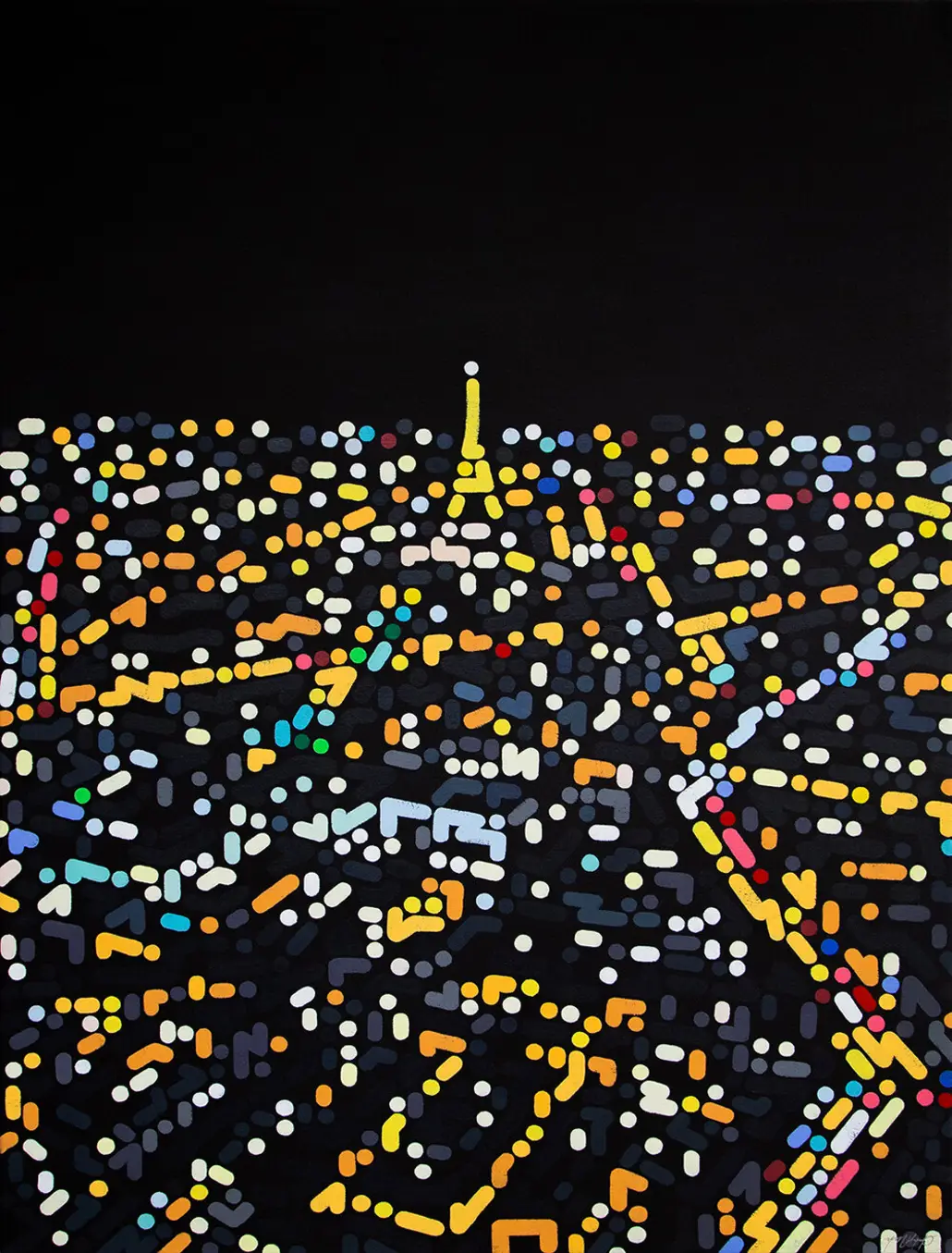
Yoon Hyup, Night in Paris 1, 2020. A depiction of Paris constructed from simple dots in a pointillist style. While individual dots appear abstract at close range, the image emerges only at a larger scale.
This effort aims to develop transformative approaches for systematically understanding how particle-scale characteristics and interactions govern emergent macroscopic behavior in granular materials, enabling insights that have not previously been possible.

Pixar’s Toy Story 3 incinerator scene, illustrating large-scale granular flow and interaction of shredded waste materials through particle-based simulation.
Numerical Methods and Advanced Computing integrates computational mechanics, particle-scale modeling, high-performance computing, and AI-driven frameworks to enable efficient, high-fidelity simulation of granular systems and enhance predictive capabilities.
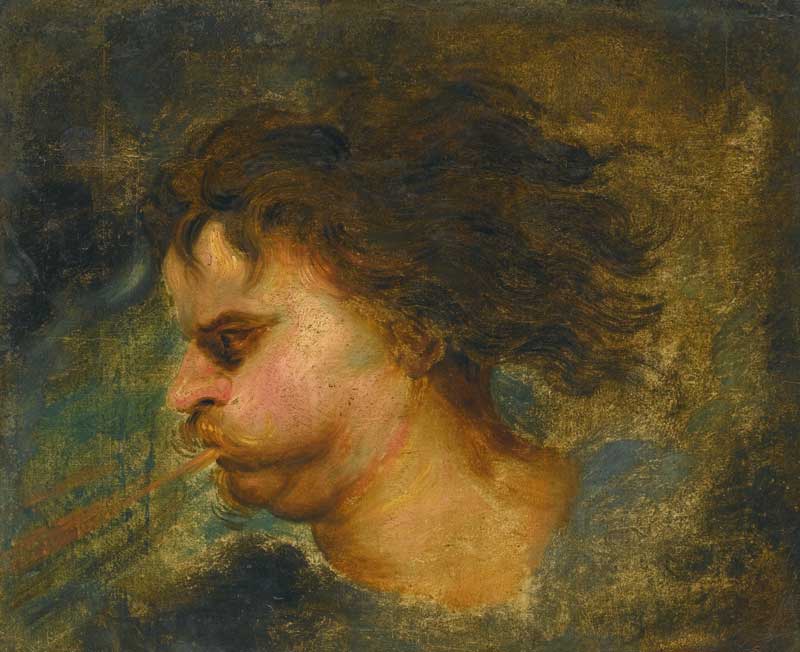
Flemish School, The God Aeolus Blowing the Wind, 17th century. Once personified as Aeolus, the ruler of the winds in Greek mythology, wind is now studied through the science of wind engineering, which seeks to quantify and predict its effects on buildings and urban environments.
As the building skin, façades serve as the primary barrier between the built and external environments, protecting occupants and interior building systems from wind hazards. My research focuses on understanding wind-induced façade failures and developing advanced design methodologies that improve the safety, resilience, and long-term performance of buildings and urban communities.
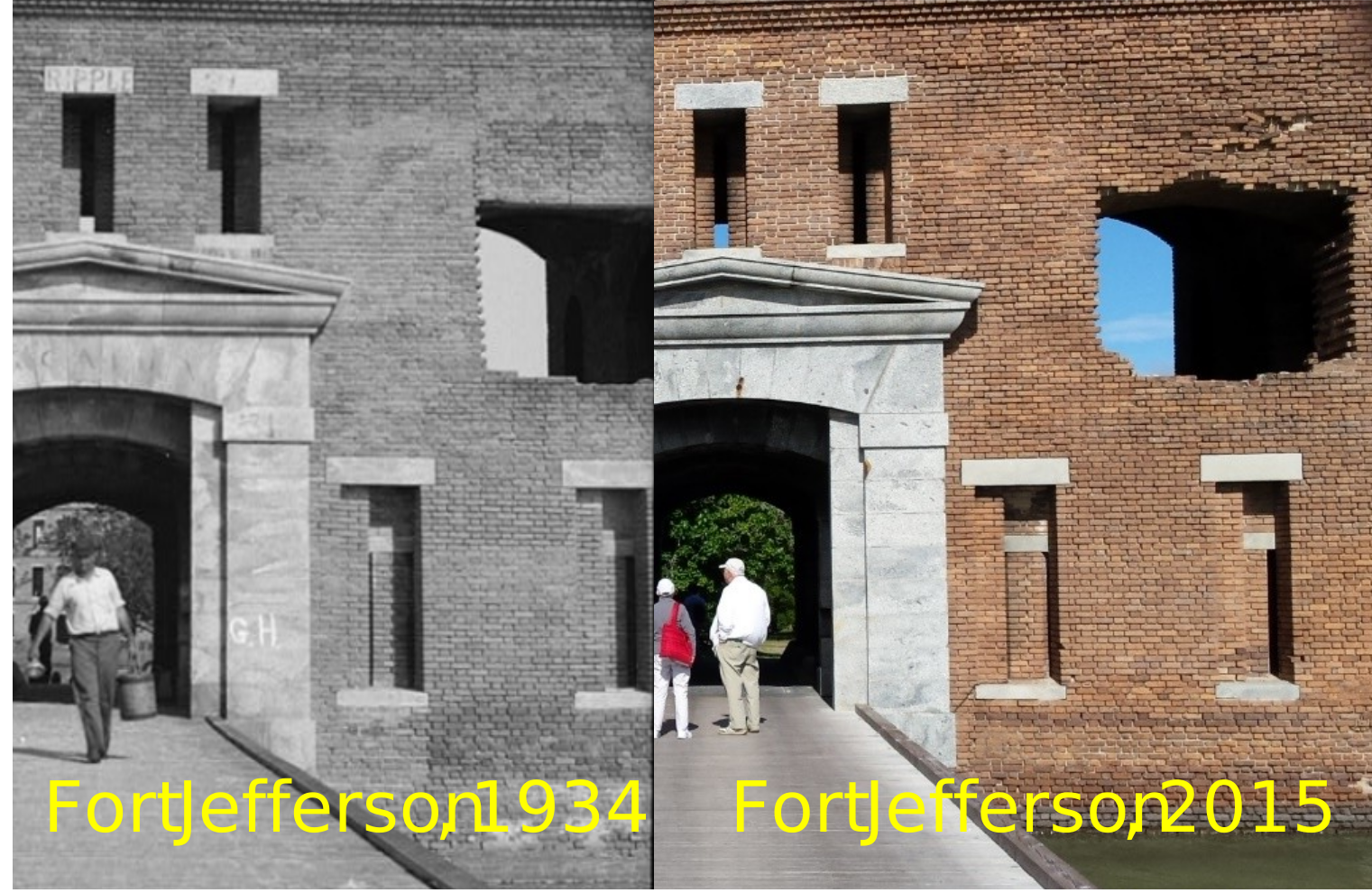
Fort Jefferson, a historic masonry fortress completed in 1847 in the Dry Tortugas, 68 miles west of Key West, Florida. Comparison of photographs from 1934 and 2015 reveals progressive deterioration near the cannon embrasure, illustrating how decades of environmental exposure can negatively impact the structural condition.
Historic structures and artworks provide an irreplaceable record of human history, culture, and engineering achievement. My research focuses on understanding deterioration processes through image-based analysis and computational modeling, while developing advanced methods to assess condition, predict future degradation, and improve the long-term preservation and resilience of cultural heritage assets.
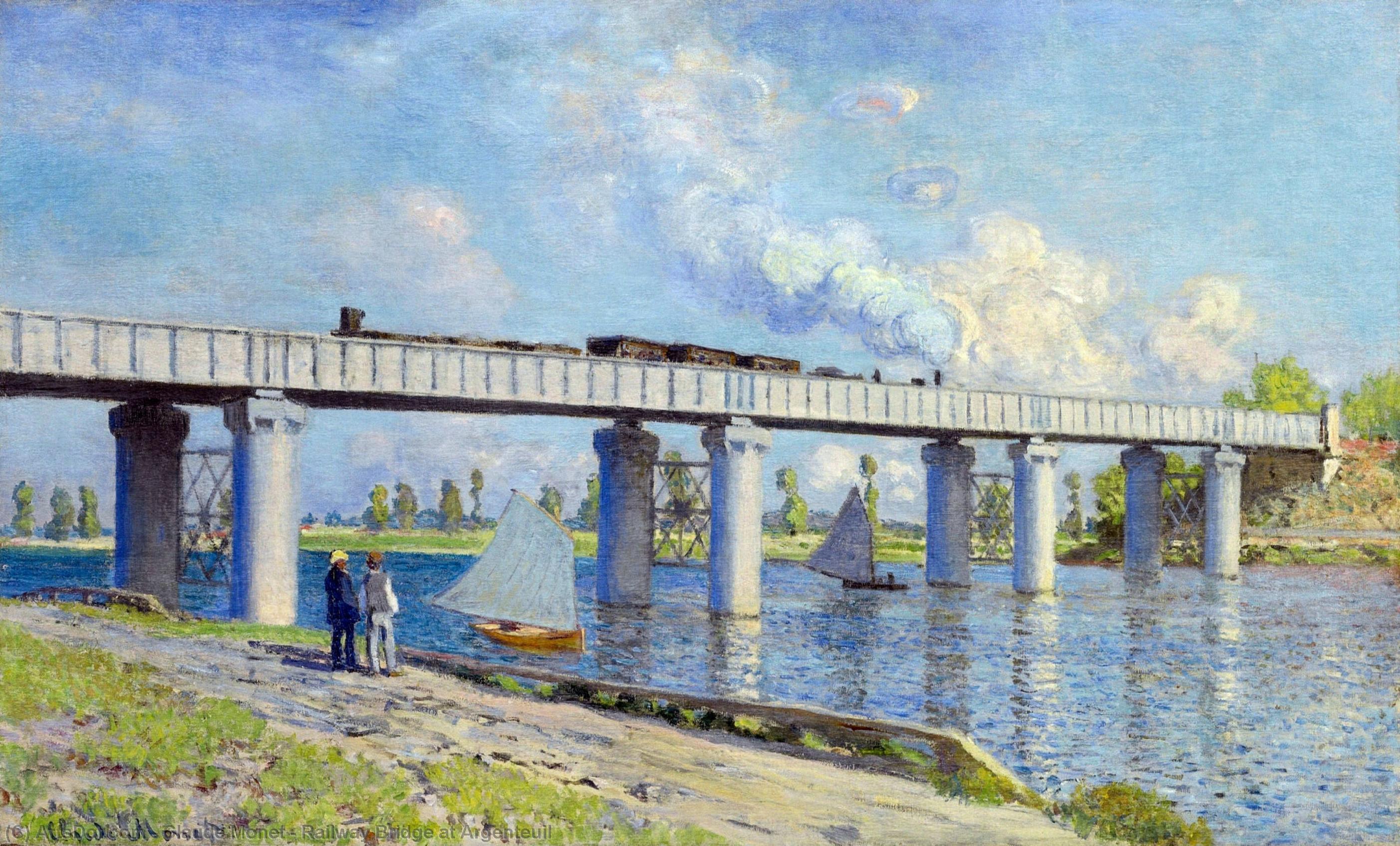
Claude Monet, The Railway Bridge at Argenteuil, 1874. A defining emblem of industrial modernity, the bridge is woven into the landscape rather than set against it. That interplay between engineering and nature remains evident in South Florida, where critical infrastructure is embedded within a landscape of vibrant coastal communities and unique natural environments.
Bridges serve as critical infrastructure that supports community connectivity, economic activity, and emergency response, particularly in coastal regions where reliable transportation networks are essential. This research area integrates structural analysis, predictive modeling, and durability assessment to improve the long-term performance, resilience, and sustainability of bridge systems in South Florida and beyond.